
Bipolar I/II
Beyond mood swings
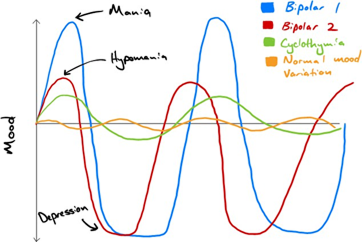
However, in bipolar disorder, symptoms tend to be episodic-people may feel like themselves for stretches of time, then notice a shift in energy, thinking, and behavior that is different from their typical selves. Often, the individual does not notice the shift, but others around them do.
Many people seek help during the depression time period, and don’t recognize that the activation periods were clinically significant. Others may experience “up” phases that include irritability, agitation, insomnia, or “revved-up depression (mixed features) and may present for anxiety or ADHD treatment.
Bipolar disorder is frequently missed, and Mayo clinic notes it can take an average of 10 years after initial mood symptoms start to achieve an accurate diagnosis. Bipolar disorder often gets confused with major depression, generalized anxiety, ADHD, burnout, and may lead to substance struggles.
Signs of bipolar disorder may include:
- Recurrent depression or mood episodes that come in “waves”
- Periods of decreased need for sleep without feeling tired
- Stretches of unusually high energy, drive, confidence or irritability
- Impulsive decisions that feel out of character such as spending, substances, impulsive sexual encounters, other risky choices
- Feeling “depressed but wired" - agitation, insomnia, racing thoughts with depression
- Mood destabilization, significant increase in agitation, impulsivity or insomnia, or acute suicidal thoughts after starting/using antidepressants, particularly serotonin-based antidepressants
- Suicidal thoughts
- Severe insomnia not attributable to other causes
Hypomania/mania symptoms may include:
- Elevated mood or marked irritability
- Less need for sleep with sustained energy
- Racing thoughts, rapid speech, increased talkativeness
- Increased goal-directed activity, restlessness, or feeling “driven”
- Increased confidence, urgency, or distractibility
- Poor judgment or risk-taking behavior
Mixed features
Some people experience a condition called “mixed mania”...it has been described as being depressed at 100 miles an hour. Depression combined with agitation, irritability, racing thoughts, insomnia, or restlessness can be confusing and may be labeled as anxiety. This condition is aggravated by antidepressants and merits careful effective management with mood stabilization.
Additionally, a depression episode is not required to make a diagnosis of bipolar disorder. Rarely, people may have mania without interval depression.
If your symptoms are “more than moodiness” or are causing disruption to your life, please consider reaching out and partnering with us to discern what next steps might look like.